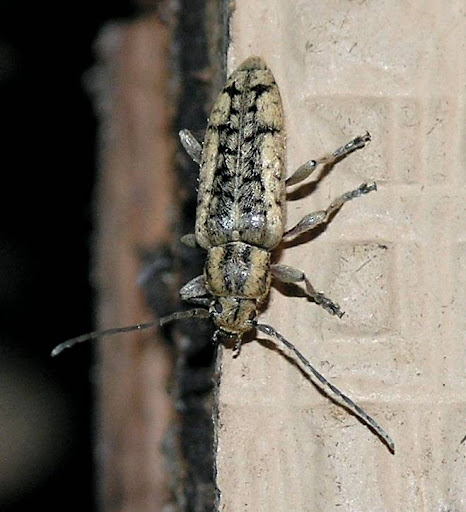
Toothed Phigalia Moth (Male)
(Photo: Marvin Smith on 1/20/10)
They say the early bird catches the worm. I'm not sure what this early species of moth is trying to catch. Maybe it's trying to give its larvae first choice at the opening leaves of deciduous trees? A Toothed Phigalia was the first moth of the new year I saw here this year and last. In fact, it's likely that Phigalia denticulata (or another Philgalia sp.) will be the first moth seen throughout their range. Being early is the one remarkable feature of this common and fairly nondescript moth. Adult P. denticulata fly from December to April in the south; late March and April in the north.
Range: Ontario and New York to Florida, west to Texas, north to Missouri; also recorded in Utah.
Reproduction: The general rule for moths is: Males find the females. This is especially true for this genus of moths because females have only tiny nub-like wings and are flightless. (A photo of a female Phigalia titea is here.)
Source: BugGuide Species Page

.