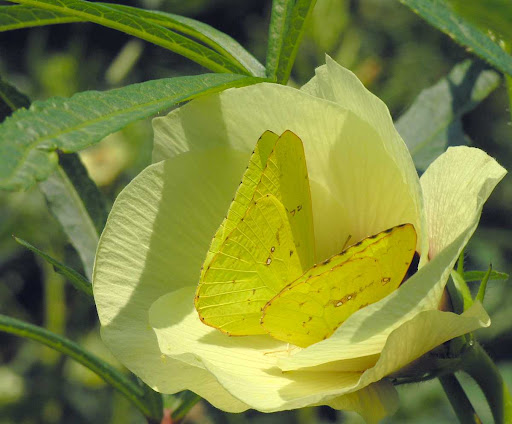
Cloudless Sulphur (Phoebis sennae)
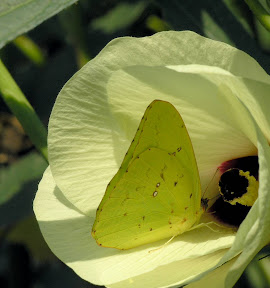
For several weeks during the fall Sulphurs are the most common butterflies here in the Ozarks. Okra's long-tubed blooms are well suited to Sulphurs' feeding habits. The end results are excellent yellow on yellow photo opportunities.
From
Butterflies and Moths of North America and the
BugGuide:
Identification: Upper surface of male is lemon yellow with no markings. Female is
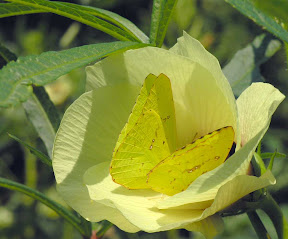
yellow or white; outer edges of both wings with irregular black borders; upper forewing with dark spot in cell. Lower surface of hindwing of both sexes with 2 pink-edged silver spots.
Life history: Males patrol with rapid flight, searching for receptive females. Eggs are laid singly on young leaves or flower buds of host plants; caterpillars eat leaves and rest on underside of leaf petioles.
Flight: Many flights year around in the Deep South; may have one flight in late summer in other southern states; immigrants to northern states in August or September usually do not reproduce.
Caterpillar hosts: Cassia species in the pea family (Fabaceae).
Adult food: Nectar from many different flowers with long tubes including cordia, bougainvilla, cardinal flower, hibiscus, lantana, and wild morning glory.
Habitat: Disturbed open areas including parks, yards, gardens, beaches, road edges, abandoned fields, scrub
Range: Permanent resident from Argentina north to southern Texas and the Deep South. Regular visitor and occasional colonist in most of the eastern United States and the Southwest.
Okra (Abelmoschus esculentus)
From the
University of Illinois Extension Service:
Okra is a tall-growing, warm-season, annual vegetable from the same family (Mallow) as hollyhock, rose of Sharon and hibiscus. The immature pods are used for soups, canning and stews or as a fried or boiled vegetable. The hibiscus like flowers and upright plant (3 to 6 feet or more in height) have
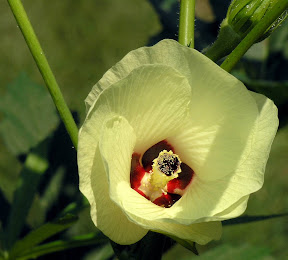
ornamental value for backyard gardens.
Other okra links:
All About Okra
Texas A and M University

Cloudless Sulphur (Phoebis sennae)

 weekend in June. Because of our late start, we didn't bother planting some crops -- like corn. We anticipated problems with other crops. We figured the question was: Would the crops produced before succumbing to the prolonged heat and dryness typical of our late summer?
 veggies -- like tomatoes and green beans -- produced well. Others -- like the potatoes we harvested today -- did not do so well. I really do not know why our potatoes produced so poorly. I've heard others also had poor potato yields. Ditto for peppers (bell, jalapeno, etc.) which are usually a "nothing to it" plant to grow.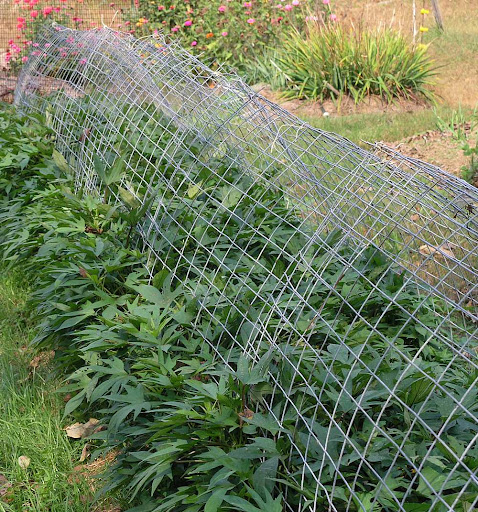


 yellow or white; outer edges of both wings with irregular black borders; upper forewing with dark spot in cell. Lower surface of hindwing of both sexes with 2 pink-edged silver spots.





