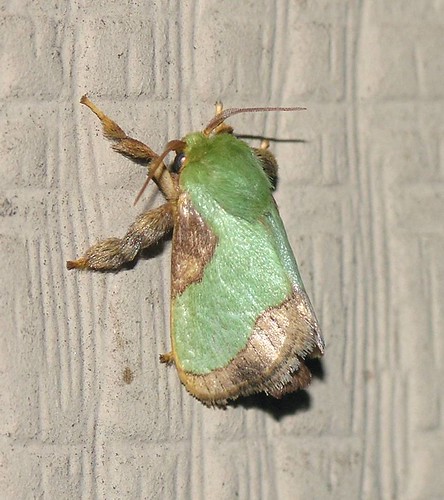
Common Name: Stinging Rose Caterpillar Moth
Scientific Name: Parasa indeterminaHodges: #4699
Family: Limacodidae (Slug Caterpillar Moths)
Range: Eastern United States (New York to Florida, west to Missouri and Texas).
Caterpillar host species: Apple, dogwood, hickory, maples, oaks, poplars, and rose bushes.
Slug Caterpillars (from Auburn University ): Slug caterpillars bear little resemblance to the typical caterpillar. The head is hidden within the thorax; thoracic legs are reduced; and prolegs are modified to sucker-like lobes without crochets. Movement is slow, gliding, slug-like.
Similar Species: Smaller Parasa (
Parasa chloris) Besides being a little larger, the forewing of
P. indetermina is more rounded and has a
dark patch midway in the brown terminal band.
Caterpillars: A Stinging Rose Caterpillar is one of the more gaudy examples of
Aposematic coloration ((from apo- away, and sematic sign/meaning). It sends a clear signal that it should not be eaten -- or even handled, since the caterpillar's body is covered with stinging spines. The
University of Arkansas has a great photo of the caterpillar and drawing of the spines.
.

Stinging Rose Caterpillar Moth (Parasa indetermina)