I learned a new vocabulary word today: Protandrous. According to Dictionary.com protandrous means "Of or relating to a flower in which the anthers release their pollen before the stigma of the same flower is receptive." It is a strategy by which a complete flower -- one having both male and female parts -- prevents or limits self-pollinization and helps ensure the exchange of genetic information with another member of the same species. Rosepink (Sabatia angularis) is an example of a protandrous flower.
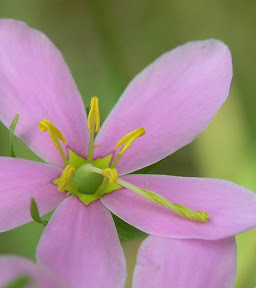
When the rosepink flower first opens the five stamens (male) stand erect their anthers are heavily laden with pollen. However, the style (female) lays flat against the petals and its two branches are twisted together concealing their stigmatic lines. Any pollinators visiting the flower -- usually short-tongued bees -- are likely to receive a dusting of pollen from the anthers, but highly unlikely to deposit any of that pollen on the style and fertilize the flower.
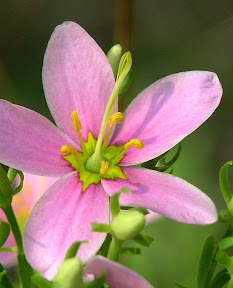
After a few days when the anthers' pollen supply is significantly reduced, the style begins to stiffen and stand erect.
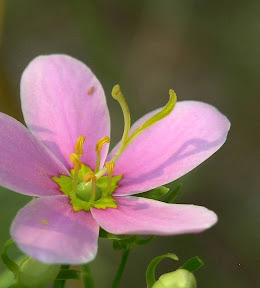
The two branches of the style also untwist exposing their pollen receptive stigmatic lines.
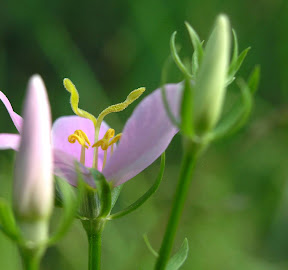
Eventually the two branches of the style are spread out across the top of the flower. Pollen dusted insects don't know that this flower's supply of pollen is depleted. As they enter the flower and probe about looking for pollen, they accidentally dust the stigmas and fertilizer the flower.
Rosepink is a native annual that blooms mid-summer in most of the central and eastern United States except for the far northeast. (USDA distribution map)
Missouri Flora has an excellent photo showing the entire plant.
Now all I have to figure out is how to work my new vocabulary word into casual conversation before I forget it.


