Showing posts with label dill weed. Show all posts

Saturday, November 17, 2012

In The Garden

Out in our garden Jo and I are mostly focused on clean up and preparing for winter.


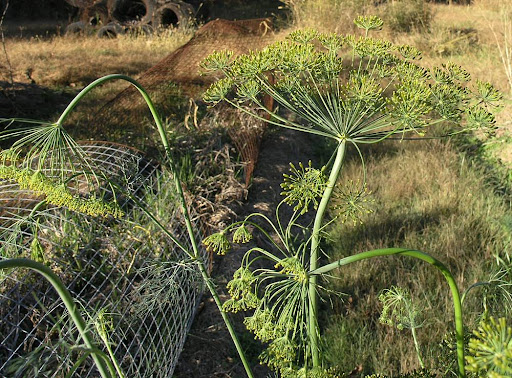
We've had temperatures slightly below freezing and several frosts, but all the volunteer dill weed is still looking good. I never realized dill was so hardy.


Almost finished mulching this bed. When finished; I'll cover with chicken wire which will help keep the leaves on and the armadillo out.


Garlic is still growing since our temperatures remain relatively warm. The garlic that got covered when I mulched the bed is growing up through the mulch.


Not everything has given up on blooming here in the late fall. This dandelion is doing just fine.


Share/Bookmark

Wednesday, October 29, 2008

A Little Miscellaneous


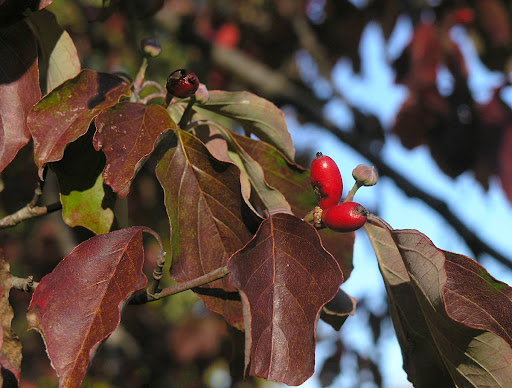
Dogwood leaves and berries.


Turn out the lights; the garden's over.


Our road out ... up near the gate.


The dill was the only plant in the garden not damaged by our light freeze.


.
Share/Bookmark

Friday, January 25, 2008

Katydid Nymph

Photo from 7/23/06

A katydid nymph exploring the dried dill weed out in the garden.


A gray winter day here. 28Âş at 3:00 PM and a gusty, damp south wind is blowing.

It's a good day for sorting through old photos. I'm deleting many that aren't as good as I once thought they were. (Hey, I've gotten better.) I'll be posting a few of the "keepers" from time to time.

Share/Bookmark

Monday, July 02, 2007

Tiphiid Wasp


Tiphiid Wasp (Myzinum sp.)

There are 13 species of wasps in this genus and it's very difficult to distinguish between some of them using only a photo. This one was nectaring on the dill weed in the garden.

The larvae of these wasps are parasitoids of white grubs (scarab larvae), especially May Beetles. Female lays one egg per grub in soil. Larvae hatches, penetrates host, first feeding on non-essential tissues, later feeding on essential organs and killing host. Pupae overwinter in soil and adults emerge in early summer, with one generation per year.

Source: BugGuide
Share/Bookmark

Thursday, June 14, 2007

Chalcid Wasp


Chalcid Wasp (Leucospis affinis)

These little wasps are parasitic. Their hosts are mainly solitary bees, less frequently solitary wasps, nesting in a similar way to bees. Their eggs are deposited externally on the host larva or nearby. The first instar larva does not take any food at first but searches the host cell for competitors; in all cases only one parasitoid larva survives and develops as an ectoparasitoid sucking the body fluids of the host larva.

This female was nectaring on the dill weed in our garden.

Sources:
BugGuide
Natural History Museum of the UK

Share/Bookmark