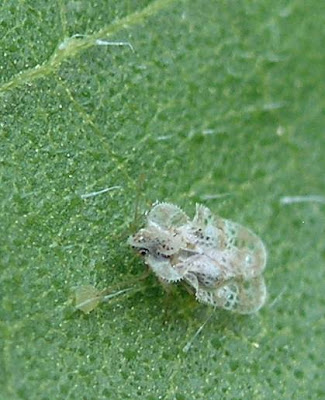
Chrysanthemum Lace Bug (Corythucha marmorata)
At around 1/8 of an inch (3mm), this tiny insect is much smaller than it's name. I thought this one was just a speck of trash on the sunflower leaf until it started crawling. Lace bugs are another of the many insects that pierce plants and suck out their juices. Some lace bugs attack deciduous trees while others attack herbaceous plants and shrubs. Some are species specific, but others will feed on a wide variety of hosts.
Despite its name, the Chrysanthemum Lace Bug is not species specific and will attack a wide variety of plants including asters, goldenrod, Helianthus, Rudbeckia, and Tanacetum. This one was on a volunteer sunflower growing under the birdfeeder.
According to the University of Virginia Extension Service:
At around 1/8 of an inch (3mm), this tiny insect is much smaller than it's name. I thought this one was just a speck of trash on the sunflower leaf until it started crawling. Lace bugs are another of the many insects that pierce plants and suck out their juices. Some lace bugs attack deciduous trees while others attack herbaceous plants and shrubs. Some are species specific, but others will feed on a wide variety of hosts.
Despite its name, the Chrysanthemum Lace Bug is not species specific and will attack a wide variety of plants including asters, goldenrod, Helianthus, Rudbeckia, and Tanacetum. This one was on a volunteer sunflower growing under the birdfeeder.
According to the University of Virginia Extension Service:
Lace bug damage is first noticed as yellow spots on the upper leaf surfaces of affected plants. Lace bugs actually feed on the undersides of leaves with their piercing-sucking mouthparts, but because they kill surrounding cells as they feed, they cause the yellow spots to appear on upper sides of the leaves. The first yellow spots that appear are very similar to mite damage, but the spots made by lace bugs are much larger. When feeding damage becomes severe, the leaves take on a gray blotched appearance or can turn completely brown. As lace bugs feed they produce brown varnish-like droppings that spot the underside of the leaves. These droppings further distinguish lace bug damage from mite damage. When large numbers of lace bugs are present cast skins can be found attached to the leaves.
Thanks to BugGuide for the ID.
Sources and additional information:
University of Virginia
University of Rhode Island
Ohio State University
University of Virginia
University of Rhode Island
Ohio State University


