Showing posts with label persimmon. Show all posts

Tuesday, December 16, 2014

Sunday, 12/14/14

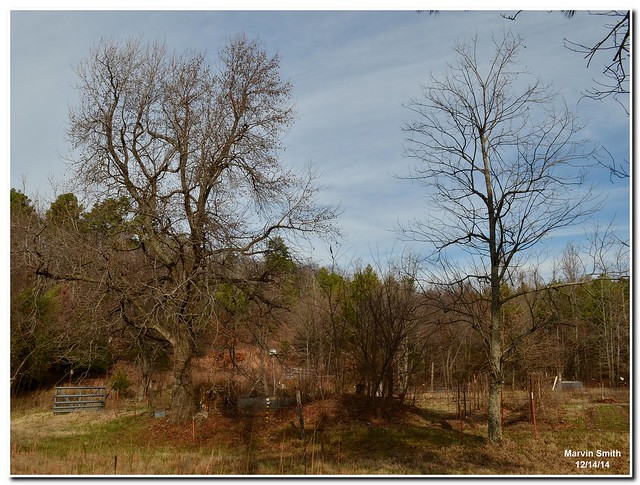
Garden Area (Sweetgum & Persimmon)

Veggie garden area with large sweetgum and smaller persimmon trees growing at the edge.  Were we totally hardcore gardeners, I suppose we'd cut down the trees growing so close to our garden so their roots would not grow into the garden beds, but we are "tree huggers" and just put up with the tree roots stealing nutrients from the beds.

High, thin clouds late morning and for most of the day.  South wind increasing.  A new cold front nearing.  Should arrive Monday.


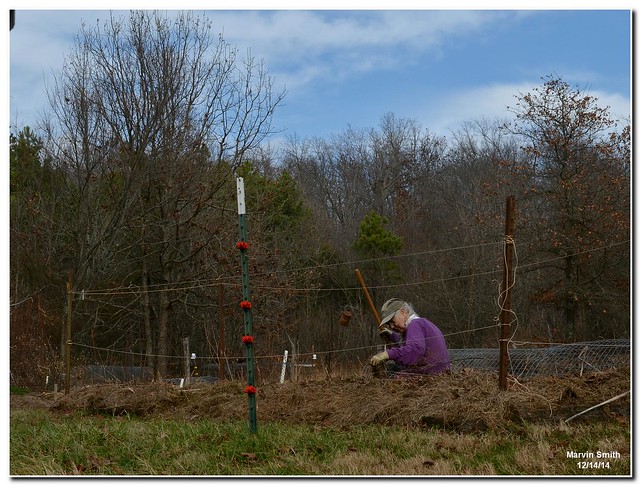
Jo Weeding Asparagus Bed

A full schedule of fall shows; meant we did no fall garden housekeeping.  Jo took advantage of a nice winter afternoon to clean up the asparagus and corn beds.

.


Share/Bookmark

Wednesday, April 13, 2011

Tree Year 2011: American Persimmon (Diospyros virginiana) #5


A large view of the American Persimmon (Diospyros virginiana) shows it still appears to be dormant. Everything around it is greening up, but the persimmon shows no change. I've "seen" this tree every year for the past 24 springs, but until I started paying closer attention to it for The Tree Year, I never realized it was one of the last trees to leaf out and/or bloom.


A closer inspection of the persimmon tree, show that it is finally preparing to leaf out. Leaf buds on April 6, are shown above.


The leaf buds are opening a few days later on April 10.


Previous Tree Year posts for this American Persimmon.


Celebrate a tree in 2011.  It's easy:  Observe, photograph, sketch, or discuss and share with other tree huggers.  Please visit The Tree Year 2011 to participate or find other blog posts dedicated to trees from around the world.

.
Share/Bookmark

Saturday, February 19, 2011

Tree Year 2011: American Persimmon (Diospyros virginiana) #4


"My" American Persimmon and "Jo's" Sweetgum tree in the fog.

A weak cold front moved through our area on Friday.  Heavy fog accompanied the slight drop in temperature.

**********
Celebrate a tree in 2011.  It's easy:  Observe, photograph, sketch, or discuss and share with other tree huggers.  Please visit The Tree Year 2011 to participate or find other blogs post dedicated to trees from around the world.

Previous American Persimmon posts here.


.
Share/Bookmark

Sunday, February 06, 2011

Tree Year 2011: American Persimmon (Diospyros virginiana) #3


Our American Persimmon enjoyed a variety of weather over the past week.  Tuesday (2/1/11) began with light rain.  Our temperature dropped below freezing mid-morning, the rain became freezing rain and ice began accumulating on everything that was up off the ground.  The freezing rain lasted for several hours, but fortunately, there was not enough ice accumulation to cause any limbs breakage or other visible damage to our trees.  Sleet and the a light dusting of snow followed the freezing rain.


Wednesday was mostly clear and cold yielding lots of sparkling ice, but little melting.


Snow began mid-day on Friday (2/4/11) and kept falling throughout the afternoon and evening.  We were predicted to receive a couple of inches of snow, but about twice that amount actually fell.  It was a wet, sticky snow that clung to the trees, but caused no damage.  Saturday was sunny and our temperature climbed up to around 40°F/4°C.  There was much snow melting, but plenty of it is still around.


Celebrate a tree in 2011.  It's easy:  Observe, photograph, sketch, discuss and share with other tree huggers.  Please click the logo above for participation details.

.
Share/Bookmark

Monday, January 31, 2011

Tree Year 2011: American Persimmon (Diospyros virginiana) #2

Photo taken on January 19, 2011.


This American Persimmon I'm observing for The Tree Year 2011 has had a very hard life in recent years:


2007:  We had a very late hard freeze.  The persimmon had already bloomed and set fruit.  All fruits were killed by the freeze.  All our trees suffered that year.  Most were blooming or had bloomed, and a few were even beginning to leaf out.  All that tender growth was killed by the low temperatures.  There were hardly any fruits, nuts or other seed forms that year.  As I remember it, only the hickories escaped damage and bore nuts because they'd not yet bloomed.


2008:  As if to compensate for not bearing fruit the previous year, this persimmon tree was loaded with persimmon fruit in 2008 -- too loaded.  Several limbs broke under the weight of ripening persimmons.


2009:  A very bad year of all of the trees on our place.  We had a severe ice storm in late January.  No tree escaped damage.  Many we stripped of branches, snapped in two or fell and were uprooted.  It's not an exaggeration to say that the woods on our property will not look the same within my lifetime.  Considering all the damage, this persimmon came through the event in fairly good shape, only losing several more branches.  Branches lost in 2008 and 2009 are the reason for this tree's very asymmetrical shape and prolific new branch growth.


2010:  Close to normal, though our summer was very hot and dry.  The persimmon bore fruit and there were no obvious signs of ill effects caused by our hot, dry weather, but I'm sure the dry conditions added to the tree's load of stress.


2011:  I will observe, photograph and see what happens.


Celebrate a tree in 2011.  It's easy:  Observe, photograph, sketch, discuss and share with other tree huggers.  Please click the logo above for participation details.

.
Share/Bookmark

Friday, January 14, 2011

The Tree Year 2011: American Persimmon (Diospyros virginiana) #1

January 13, 2011


This American Persimmon (Diospyros virginiana) is one of the two trees I've chosen to celebrate in 2011.  It's a "yard tree", growing just outside of our vegetable garden.  Choosing a yard tree has advantages.  Observing and photographing  will be easy.  Also, this persimmon and I are old friends.  We've known each other for the past twenty-five years.  The disadvantage is that it will be impossible for me to photograph this old friend without including a lot of yard and garden clutter.  So be it.  The tree is more important than the clutter.


Persimmon facts:  Persimmons are members of the ebony family (Ebenaceae).  There are about 200 species of ebonies worldwide.  Most are tropical.  Persimmons are the only member of the ebony family native to North America.


Celebrate a tree in 2011.  It's easy:  Observe, photograph, sketch, discuss and share with other tree huggers.  Please click the logo above for participation details.

.
Share/Bookmark

Saturday, October 25, 2008

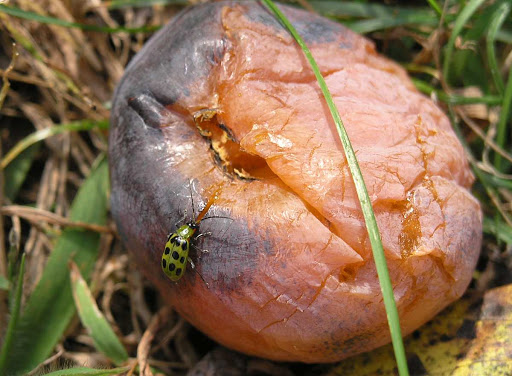
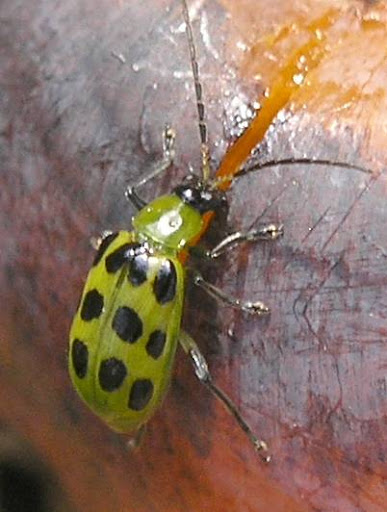
Spotted Cucumber Beetle (Diabrotica undecimpunctata)


Spotted Cucumber Beetle (Diabrotica undecimpunctata)

From a human perspective, this brightly colored, spotted little critter is a PEST.  The larvae (often called a Southern Corn Rootworm) feed on the roots of a large range of plants, including many field crops.  Adults will eat almost anything from cucumbers to roses.  Adults also transmit bacterial wilt and other diseases.

As with many other pest species, our experience with this beetle in our garden is that there is almost always a few around during the growing season, but they've never been a problem.  Their population has always remained at a background level.
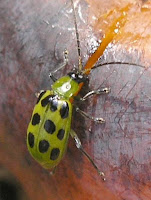


This particular cucumber beetle is feasting on a fallen and partially fermented persimmon.  These persimmons are attracting many insects, mostly bees and wasps.  I've read about wild mammals becoming intoxicated after eating large amounts of fermented fruit.  I wonder if the same thing can happen with insects?  One the one hand, the alcohol content of the persimmons is low and the insects eat tiny amounts.  On the other hand, the body weight of  insects is minuscule.  It wouldn't take much alcohol to produce inebriation.  I mean, how can one tell if a beetle or wasp is flying under the influence of alcohol?

Source:  BugGuide
Share/Bookmark

Wednesday, August 13, 2008

Persimmons


Our persimmon tree is loaded with green fruit this year. It's almost as if it know it produced nothing last year due to a late freeze killing all the blooms. The only problem is: Some of the branches are breaking under their load of green persimmons.

Share/Bookmark