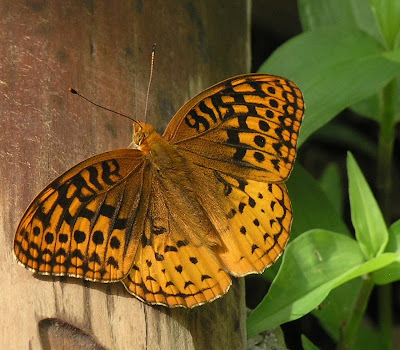
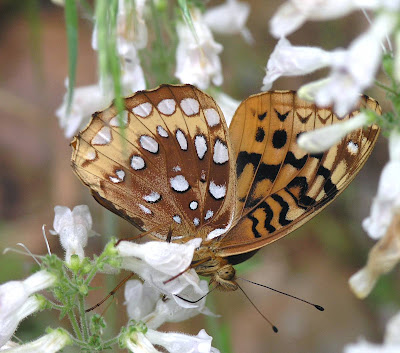
Butterfly Weed, 5/31/07 (Jo's photo)
On Friday Jo and I and the dogs took what will probably be our last walk in the woods until late next fall. Our normal daily walk route is a loop that's about 50/50 pasture and woods. A small part of the walk is on old cow trails, but the majority of it is just cross country -- and the country is getting too grown up for comfort and safety. As much as I enjoy being in the woods, walking through waist high grass just isn't much fun. You cannot see your feet to determine what you might be stepping on. You're bound to pick up at least a half dozen ticks along the way. And, between the maturing grass seeds and stick-tights, Rusty and Bucket come home looking like potential Chia Pets.
Jo was the first to suggest that Friday's walk should be our last for this summer. I protested, saying we'd continued walking that loop longer last year. I based my assertion on the fact that there are at least a couple blooming wildflowers (butterfly weed and larkspurs) we'd photographed last years that are not yet in bloom this year. Jo gently suggested that those wildflowers might be blooming later in 2008. I checked last year's photos and Jo was right. (Someday perhaps I'll learn that Jo's always right.) I certainly don't keep enough weather records or know the plants well enough to know why they're blooming later this year, but they are at least a week to 10 days behind.
For the remainder of the summer and early fall, we will take our daily walks up the road and back. There will still be wildflowers and more than enough bugs for us to photography along the roadside and in the yard, but I will still miss our daily trip through the woods.
Jo was the first to suggest that Friday's walk should be our last for this summer. I protested, saying we'd continued walking that loop longer last year. I based my assertion on the fact that there are at least a couple blooming wildflowers (butterfly weed and larkspurs) we'd photographed last years that are not yet in bloom this year. Jo gently suggested that those wildflowers might be blooming later in 2008. I checked last year's photos and Jo was right. (Someday perhaps I'll learn that Jo's always right.) I certainly don't keep enough weather records or know the plants well enough to know why they're blooming later this year, but they are at least a week to 10 days behind.
For the remainder of the summer and early fall, we will take our daily walks up the road and back. There will still be wildflowers and more than enough bugs for us to photography along the roadside and in the yard, but I will still miss our daily trip through the woods.