Saturday, March 28, 2009

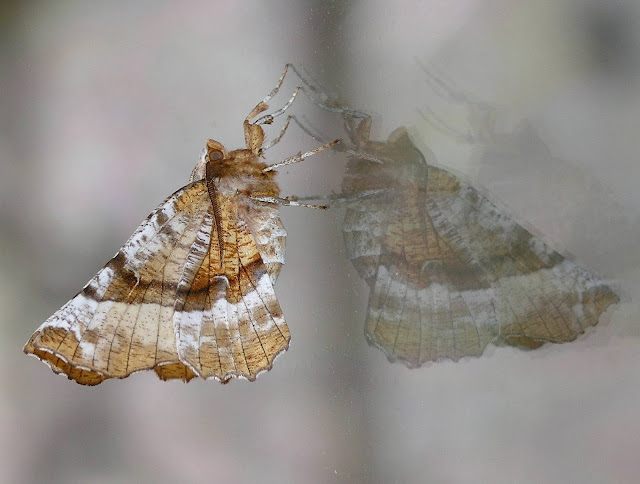
Kent's Geometer Moth (Selenia kentaria)

(Photo taken on 03/25/09 by Marvin)

Kent's Geometer Moth (Selenia kentaria)

One of the many Geometridae moths that inhabit the central and eastern mixed hardwood forests of North America. Unlike most moths, this species holds its wings overhead as do butterflies. Larva is an "inch worm" caterpillar that mimics a twig. (See here for photo)


Sources:
BugGuide
University of Alberta


.
Share/Bookmark

Tuesday, March 24, 2009

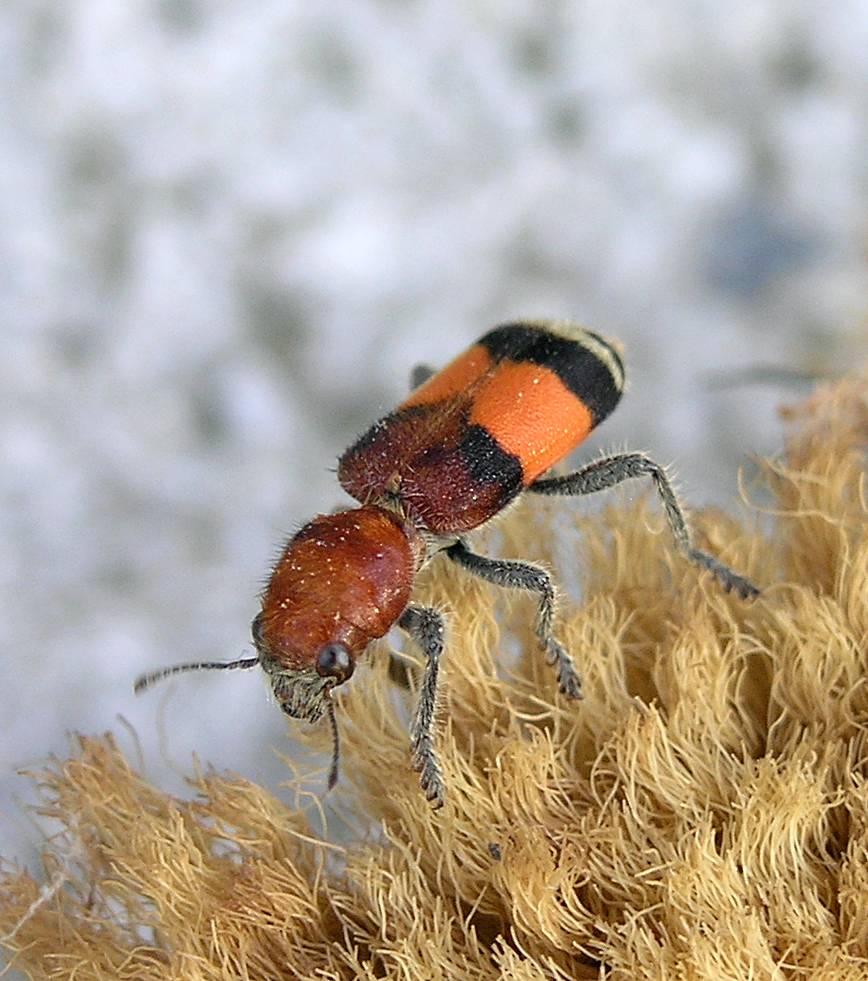
Checkered Beetle (Enoclerus ichneumoneus)

(Photo taken on 03/23/09 by Marvin)

Checkered Beetle (Enoclerus ichneumoneus)

Like many insects, Checkered Beetles do not have a significant economic impact upon human agricultural endeavors and, therefore, haven't been studies a great deal. About all I could find out about them is that both larvae and adults are predators. Some adults feed on pollen, some species are attracted to carrion and stored animal products. Their typical habitat is wooded areas where they can be found under bark, in galls and around woody plants. I have seen a checkered beetle eating squash bug eggs.

.
Share/Bookmark

Monday, March 23, 2009

Today's Flowers: Bloodroot

                                                                                                                                      (Photo taken on 03/22/09 by Jo)

Bloodroot (Sanguinaria canadensis)

Bloodroot is a member of the Poppy family. Its name is derived from the red juice that can be extracted from it's red-orange roots (actually rhizomes). Various medicinal and mystical properties have been associated with this juice in the past. However, since the juice is escharotic (a substance that causes tissue to die and slough off) and an incorrect internal dosage is toxic, the FDA recommends that bloodroot not be used by herbal healers.


Related Posts:


To participate in Today's Flowers please click on the logo above.

.
Share/Bookmark