Showing posts with label spring. Show all posts

Monday, January 09, 2012

Daffodils


I'm afraid these daffodils are too full of anticipation for spring. These are part of a group growing in the woods at the edge of our road. They were transplanted when our water line was laid -- dug up by a dragline and replanted by a bulldozer, and doing just fine. (1/9/12)

.
Share/Bookmark

Sunday, March 21, 2010

Daffodils on the First Full Day of Spring


Daffodils on the first full day of Spring in the "Sunny South, USA".

.
Share/Bookmark

Sunday, April 19, 2009

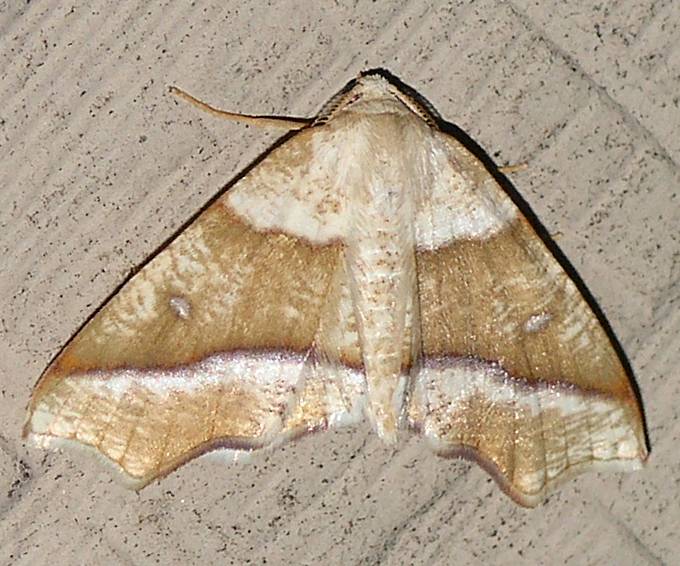
Hollow-spotted Plagodis Moth (Plagodis alcoolaria)

                                                                                                       (Photo taken on 4/18/09 by Marvin)


Hollow-spotted Plagodis Moth (Plagodis alcoolaria)


BugGuide Species Page:
Range - Eastern and central North America
Life Cycle - Larvae feed on deciduous trees (basswood, beech, maples, oaks)

Moths of Maryland:
Excellent photos of variability in this species.

University of Alberta Entomology Collection:
Adults come to light, and may also be active during the day ... Pupae overwinter ... Larvae are twig mimics.

Moth Photographers Group

.
Share/Bookmark

Warm-chevroned Moth (Tortricidia testacea)


Warm-chevroned Moth - Hodges#4652 (Tortricidia testacea)


University of Alberta: The caterpillars are short-legged and slug-like, and give the family their name, the slug-caterpillar moths. They are solitary defoliators of deciduous trees.

BugGuide Species Page: Range: Nova Scotia west and south to Manitoba, Missouri, Mississippi. (Obviously, they can range as far south as northern Arkansas.)

Moth Photographers Group: Another common name: Early Button Slug Moth.

Moths of Maryland: Larva feed on beeches, birches, black cherry, chestnut, oaks, and witch hazel.

.
Share/Bookmark

Thursday, April 16, 2009

Bi-Color Bird's Foot Violet (Viola pedata)

(Photo: 3/27/09 by Marvin)

Bird's Foot Violet (Viola pedata)

Bird's Foot Violet is a very common wildflower in the Ozark Mountains. It's preference for rocky and dry woodlands means it finds much of the Ozarks ideal habitat. Bi-color bird's foot violets are less common than solid colored, but one still sees many of them. The cluster pictured above was growing at the top of the first hill along our road out -- about the same place where the census taker abandoned her car and decided to walk the rest of the way down to our place -- definitely rocky.

According to Wildflowers of Missouri:


Flowering - April - June and sometimes again in late fall.
Habitat - Rocky or dry open woods, slopes, ridges, prairies, glades, roadsides.
Origin - Native to U.S.
Other info. - This is a striking and easily identifiable species. The flowers are very large and the leaves are finely divided and are similar to a birds foot. The common name for the plant is "Bird's Foot Violet".


Other Sources and Information:
Discover Life
Missouri Botanical Gardens

.
Share/Bookmark

Monday, March 23, 2009

Today's Flowers: Bloodroot

                                                                                                                                      (Photo taken on 03/22/09 by Jo)

Bloodroot (Sanguinaria canadensis)

Bloodroot is a member of the Poppy family. Its name is derived from the red juice that can be extracted from it's red-orange roots (actually rhizomes). Various medicinal and mystical properties have been associated with this juice in the past. However, since the juice is escharotic (a substance that causes tissue to die and slough off) and an incorrect internal dosage is toxic, the FDA recommends that bloodroot not be used by herbal healers.


Related Posts:


To participate in Today's Flowers please click on the logo above.

.
Share/Bookmark

Saturday, March 21, 2009

Wild Plum Blossoms

                                                                                                       (Photo taken on 03/18/09 by Marvin)

Wild Plum Blossoms

According to the field guilds, we could have several different varieties of wild plums and they hybridize easily in the wild. I'm not even going to attempt a species ID.

.
Share/Bookmark

Thursday, March 19, 2009

Peach Blossom Time in the Ozarks


                                                                                                                                  (Photo taken on 03/18/09 by Marvin)


Peach Blossoms


Growing peaches in the Ozarks is an excellent hobby for anyone who thrives on dashed hopes and expectations.  Here in northern Arkansas we are far enough south that longer days and warmer temperatures coax our peaches into bloom about this time -- or a little earlier -- every year, but we are far enough north that we will get at least one more hard freeze -- hard enough to destroy blooms or recently set fruit -- four years out of five.


.
Share/Bookmark

Friday, March 06, 2009

Daffodil


One of our first daffodil blooms of Spring, 2009.  The first blooms actually opened yesterday, but it was much too windy to get a decent photo.  Today was still windy, but not quite so bad.

These earliest blooming daffodils are part of a group growing randomly at the edge of the woods, a group transplanted by dragline and bulldozer when our water line was installed a couple of years ago.  Tenacious!


.
Share/Bookmark

Tuesday, April 01, 2008

Tiger Beetle


Splendid Tiger Beetle (Cicindela splendida)
(My best shot at an ID)

Gram for gram, tiger beetles are some of the fastest and most ferocious predators on the planet. They feed on small insects, spiders, and other arthropods. They are fast, agile flyers, and are able to catch insects in the air, though they usually run down their prey and seize it with those sickle-shaped mandibles.

Splendid Tiger Beetles are a spring/fall species. The adult beetles emerge from pupae in the autumn and are active for a few weeks or longer, depending on annual weather conditions. As frosts occur and the weather cools, the adults hibernate for the winter. They emerge from hibernation during the spring and mate and lay eggs. Because they overwinter as adults they are one of the first species to emerge in early spring. C. splendida occurs on clay banks, powerline rights-of-way, dirt roads, and mountain paths. The individual above was photographed in our road.

Tiger beetle larvae are also predators, and have a lifestyle very similar to antlion larvae. They live in vertical tunnels in where they wait for ants, spiders, other other small creatures. When prey gets close enough, the larva pops out and grabs it.


Share/Bookmark

Tuesday, March 11, 2008

Random Locations

Surprise Lilies photo taken on 2/29/08.

Bits of broken glass and pottery shards.
Multitudes of nails, a few horseshoes and numerous other rusty metal fragments.
Bulbs planted in random locations around the yard.

People have lived on our little plot of land for a long time.

We find tiny traces of their lives almost every time we dig
-- and, sometimes, after a hard rain.

It's impossible to know very much about the folks who lived here before us from the rusted and broken bits they left behind,
except we know that someone among the previous inhabitants liked flowers
and planted bulbs.

The location of the plants probably once fit into the overall layout of cabin, fences and outbuildings, but all those structures are long gone.

We still enjoy the flowers, though.


Share/Bookmark

Monday, March 10, 2008

Persistent Daffodils


In August, 2006, the local water district laid a water line down to our place. Jo dug and replanted a cluster of daffodil bulbs growing in the ditch's path, but missed a few. The neglected bulbs were unceremoniously dug up with a dragline's scoop and rudely replanted with a bulldozer's blade. We now have daffodils all over the general area, including these growing in the road. They've reemerged and are trying to bloom again this year despite being driven over for a year and a half.


Share/Bookmark

Friday, May 04, 2007

Carolina Cranesbill


Carolina Cranesbill (Geranium carolinianum)

Some might call this variety of wild geranium a weed, and it does come close to qualifying for that description. It will grow well virtually everywhere and usually does. Fields, gardens, vacant lots and idle land are among its favorite locations. But weed or not it does have a pretty little (1/4 - 3/8 of an inch) purple flower and its seeds furnish food for quail, turkeys and doves.

See also:
Wildflowers of Western Kentucky
Missouri Plants
Kansas Wildflowers and Grasses

Share/Bookmark

Wednesday, May 02, 2007

Spiderwort


Spiderwort (Tradescantia virginiana L.)

I'm not 100% sure of species. As Neartica says: There are a number of other species of Tradescantia in eastern North America. These species can be difficult to separate from T. virginiana.

Growing on the bluff at the base of the trail off Jerry Joe's north pasture. Also alongside the trail as you enter the woods.

See also: Missouri Plants
Share/Bookmark

Hairy Phacelia


Hairy Phacelia (Phacelia hirsuta)

Another wildflower found down in the woods on our walk. According to Missouri Plants it should grow just about anywhere: Rocky fields and prairies, moist soils of valleys, glades, bluffs, open woods and roadsides. However, the site does warn that the flower will fade quickly in full sun.

Share/Bookmark

Tuesday, May 01, 2007

Blackberry Bloom


The blackberries seem to be blooming heavily this year. This particular one happens to be on the hill in the garden.
Share/Bookmark

Monday, April 30, 2007

Busy in the Garden


There's a lot going on and a lot to do out in the garden these days. The broccoli was looking a little wilted during its first full day out from in under the cloches so I decided to do a little watering.

The radishes are up.

Jo's trying to get our green beans planted before it gets dark.

The cauliflower is next on my to be mulched list.
Share/Bookmark

Sunday, April 29, 2007

Blackhaw Viburnum


Blackhaw Viburnum (Viburnum prunifolium)

We have a couple of specimens growing along the edge of the woods north of the house.

Black haw is usually grown as a large, upright, multi-stemmed, deciduous shrub with an irregular crown, but it also may be grown as a small, single trunk tree. As a shrub, it typically grows 12-15' tall with a spread of 6-12', but as a tree may reach a height of 30'. Commonly occurs in moist woods, thickets and on streambanks. Non-fragrant white flowers in flat-topped cymes (to 4.5" diameter) appear in spring. Flowers give way in autumn to blue-black, berry-like drupes which often persist into winter and are quite attractive to birds and wildlife. Ovate, finely toothed, glossy dark green leaves (to 4" long) turn attractive shades of red and purple in fall. Fruits are edible and may be eaten off the bush when ripe or used in jams and preserves. Common name refers to the purported similarity of this plant to hawthorns (sometimes commonly called red haws), though hawthorns are in a different family.

Source: Missouri Botanical Gardens
Also: Missouri Plants

Share/Bookmark

Potatoes Mulched


The potatoes are now covered with grass clippings and mowed leaves. Soon the plants will be poking back up through the mulch again, but the mulch will help keep them moist and give the developing potatoes a place to grow without burying themselves so far in the ground.

Broccoli uncloched.

Spinach up.
Share/Bookmark

Saturday, April 28, 2007

Replanting Strawberries -- Again


Ozark Beauty

The first batch of new strawberries Jo planted earlier this spring didn't do so well. About two-thirds of them died. I think we let them get too dry. So, Jo picked up some berry plants in town and we'll try again. Most of these transplants are larger than the ones that have been growing in the bed for a month. Some even have fruit that is almost ripe.
Share/Bookmark