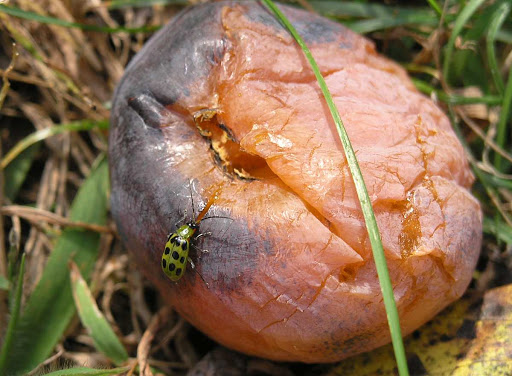
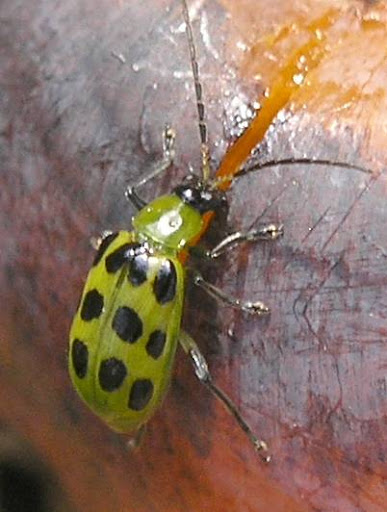
Spotted Cucumber Beetle (Diabrotica undecimpunctata)
From a human perspective, this brightly colored, spotted little critter is a PEST. The larvae (often called a Southern Corn Rootworm) feed on the roots of a large range of plants, including many field crops. Adults will eat almost anything from cucumbers to roses. Adults also transmit bacterial wilt and other diseases.
As with many other pest species, our experience with this beetle in our garden is that there is almost always a few around during the growing season, but they've never been a problem. Their population has always remained at a background level.
This particular cucumber beetle is feasting on a fallen and partially fermented persimmon. These persimmons are attracting many insects, mostly bees and wasps. I've read about wild mammals becoming intoxicated after eating large amounts of fermented fruit. I wonder if the same thing can happen with insects? One the one hand, the alcohol content of the persimmons is low and the insects eat tiny amounts. On the other hand, the body weight of insects is minuscule. It wouldn't take much alcohol to produce inebriation. I mean, how can one tell if a beetle or wasp is flying under the influence of alcohol?
Source: BugGuide

Spotted Cucumber Beetle (Diabrotica undecimpunctata)